
- What We Do
- Who We Are
- Resources
- Contact Us
 Wealth
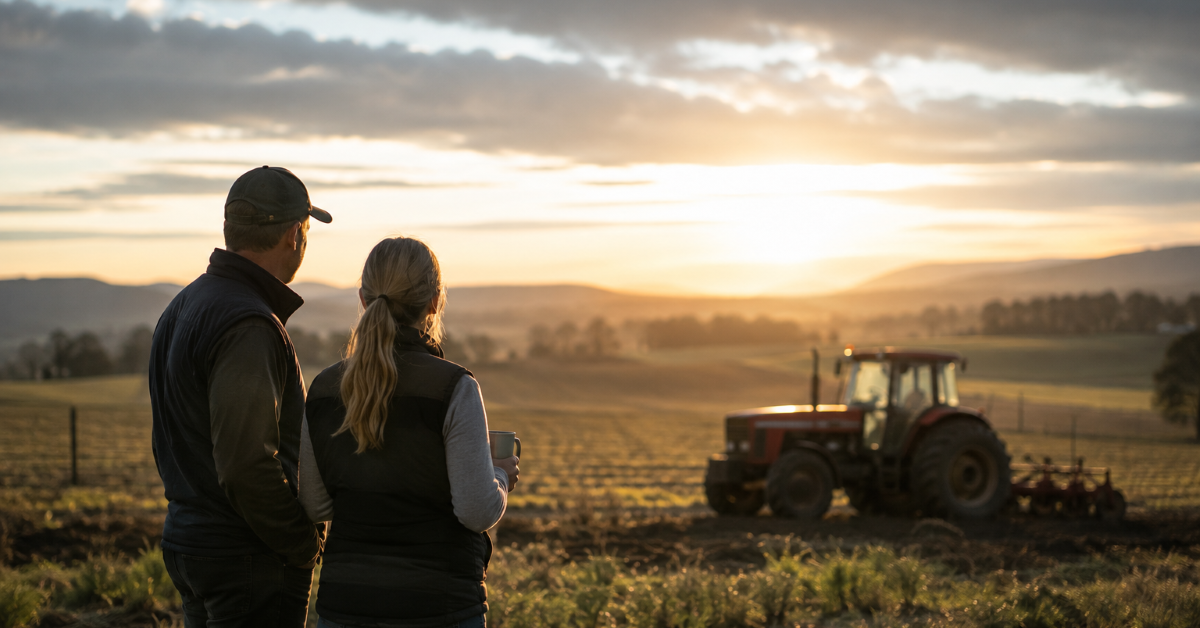
Over almost 15 years as an Investment Adviser, I have worked with business owners and farming families who have accumulated significant cash after several strong years. This is a good position to be in, but it also creates an important decision.
How much should remain available for the business, and how much can genuinely be invested for the longer term?
Holding every dollar in cash can provide comfort, but it may also result in capital earning a limited return and gradually losing purchasing power to inflation. Investing too much can create a different problem if the money is suddenly required for operating costs, seasonal pressures or a new opportunity.
The client situation
In this case, the owners of a successful business had accumulated substantial cash within their company. I have also encountered very similar circumstances when advising farming clients following strong production years, asset sales or periods of favourable commodity pricing.
For both business and farming clients, cash flow can change quickly. A healthy cash balance may need to support tax payments, wages, stock purchases, equipment, development, debt servicing, adverse weather or a period of weaker income.
The clients wanted to make better use of their capital, but they did not want to weaken the resilience of the business. Identifying information, figures and some circumstances have been changed to preserve confidentiality.
What mattered most
The clients wanted to:
The most important task was determining which funds were genuinely long term.
Our approach
We worked with the clients and their accountant to understand the expected cash requirements of the business. For farming clients, this may also involve considering seasonal income, development plans, livestock or crop expenditure, debt commitments and the potential impact of weather or commodity prices.
The available capital was then divided into three broad pools. The first pool covered immediate operating requirements and known commitments. The second pool became the business war chest. It provided accessible capital for unexpected costs, future opportunities, a downturn in revenue or a difficult farming season. The third pool represented capital that was unlikely to be required for normal business operations over the longer term. Only this third pool was considered for a diversified long term investment strategy.
The investment portfolio was also reviewed alongside the owners’ personal assets, KiwiSaver investments, property, business interests and retirement objectives. There is little benefit in creating a diversified company portfolio if the household’s total wealth remains heavily concentrated in the same sector or type of asset.
Our investment philosophy in practice
Our investment philosophy begins with the purpose and timeframe of the capital. Operating cash should remain liquid.
The war chest should prioritise accessibility and capital stability. Long term capital can generally accept more volatility and a higher allocation to growth assets.
This separation helps business owners avoid two common mistakes. The first is investing money that may be needed at short notice. The second is leaving genuinely long term capital in cash indefinitely because every dollar is treated as though it may be needed tomorrow.
Guidelines were established around:
The outcome
The clients retained the financial resilience they valued while putting genuinely surplus capital to more productive use. They knew that operating requirements were protected, the business war chest remained accessible, and the long-term investment portfolio could be left in place through normal market volatility. Each pool of capital had a clearly defined purpose. That clarity made the investment decision significantly easier.
What I have learned
Business owners and farming families often have a strong instinct to retain cash, and for good reason. The answer is rarely to invest all surplus funds or to leave everything in the bank.
The better approach is to understand what the capital needs to do.
Once those questions are answered, the business can remain resilient while long term wealth continues to develop.
At Yovich & Co, we help clients protect what their business needs while investing for what their family wants to achieve.
Jarrod Goodall
FSP198885